Scott Benzel
Notes on New Memory, the Wood between Worlds
New Memory
The Wood between Worlds
SCOTT BENZEL SEP 27, 2024

Caption: still from The Mandela Effect (2019)
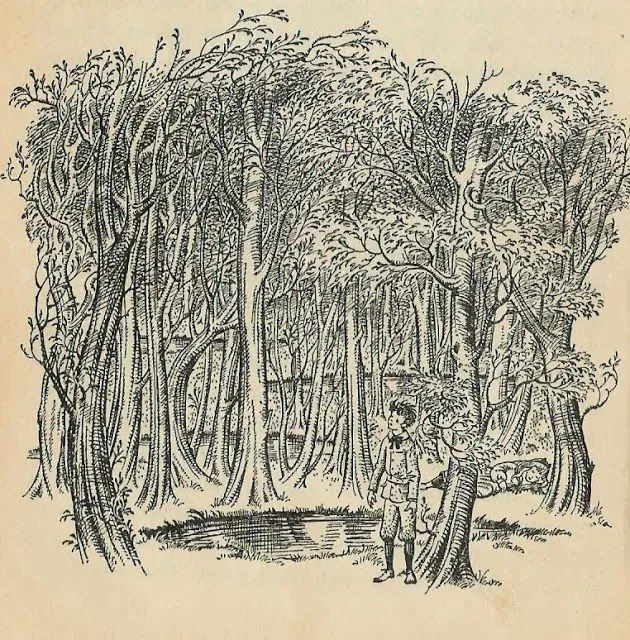
Caption: The Wood between Worlds from C.S. Lewis’ The Magician’s Nephew
New Memory: The Wood between Worlds originated with Aaron French’s academic paper The Mandela Effect and New Memory and an exploration of the “retrospective” development of the musical microgenre Dungeon Synth.

Caption: None Figure text: scottbenzel New Memory... SOUNDCLOUD Privacy policy
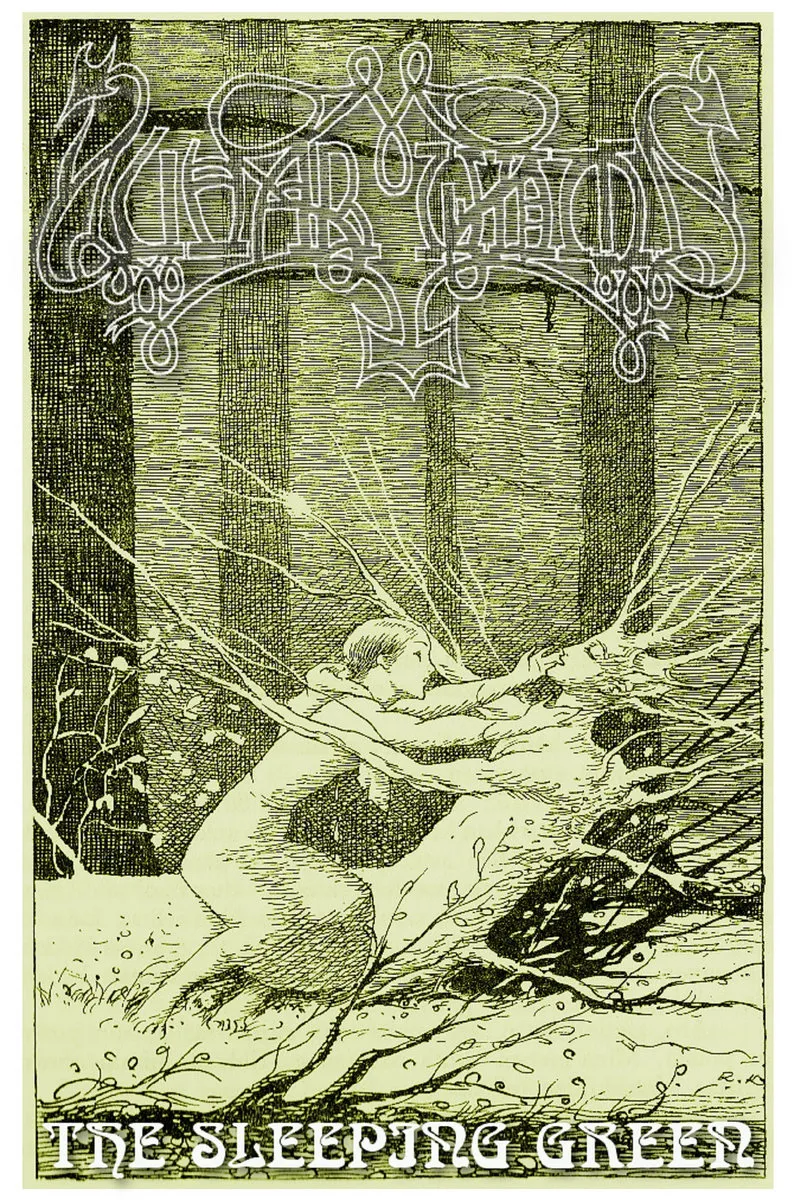
Most genres and microgenres are, to greater or lesser degrees, retrospective: diverse works are grouped together by fans and critics based on shared formal and concept characteristics. In the case of Dungeon Synth the genre tag was notably slow to develop, the name being coined around 2011 and applied to albums released as early as 1991 (UK artist Jim Kirkwood’s Master of Dragons (1991) is regularly cited as an early example). There are also instances of the coalescence of the nascent genre reviving long-dead projects: the album The Sleeping Green by Lunar Womb, recorded in 1999, went unreleased and stored on a hard-drive until 2015, its “sleeping beauty” quality reflected by its cover :
Caption: None Figure text: The logo reads "NIGHTBRINGER"
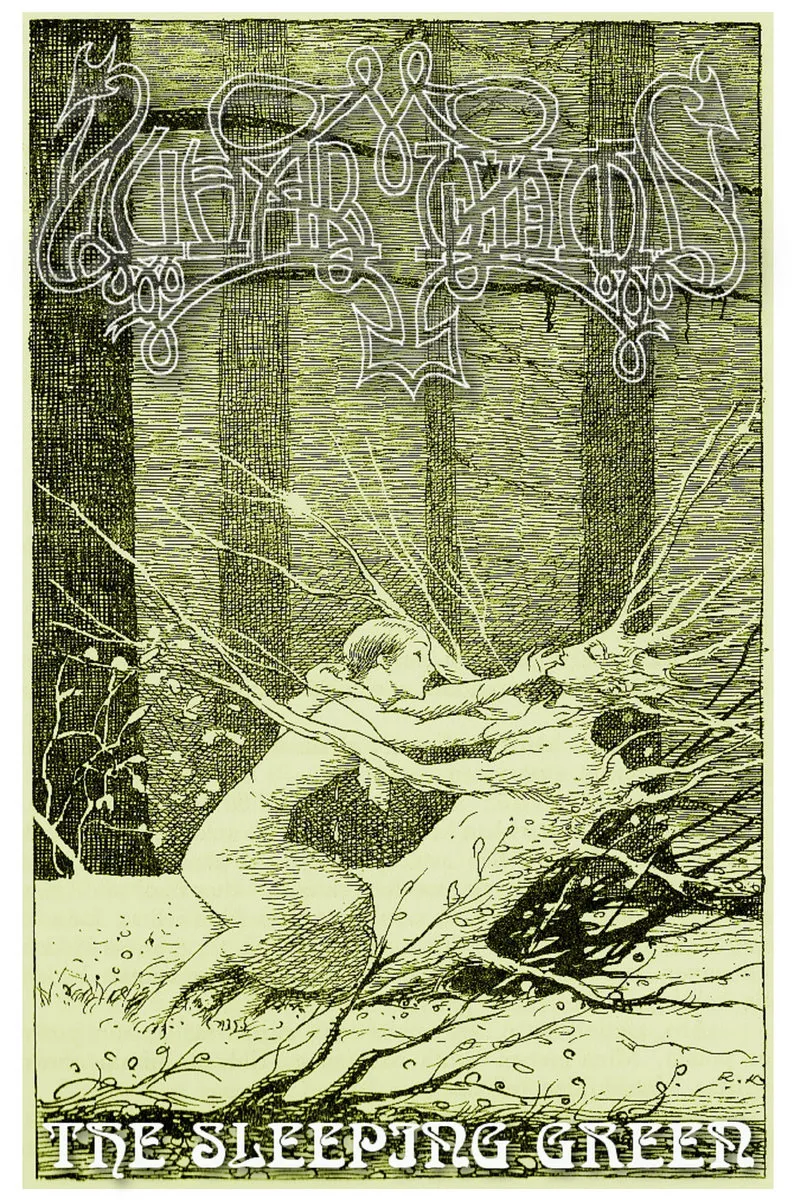
Caption: Lunar Womb, The Sleeping Green Figure text: THE SLEEPING GREEN
Henri “Trollhorn” Sorvali, the auteur behind Lunar Womb, writes:
Lunar Womb was a ambient/ folk/ electronic project of me started in 1995 with a couple of friends. After the first demo I continued alone and released another de in 1997. In 1998 I got myself some better musical equipment to fulfill my visions and this cassette demo was planned to release in the turn of 1998/1999.
Due to other band-related things, It took me some time to finish it properly but when it was finally ready I felt it was so outdated I didn´t want to release it anymore.
I found the tracks and the layout- files from my backups in 2015 and after careful reconsideration I decided to finish what I had once started and remastered it fro the original pieces. All the artwork and layout was originally intended for a casse release and the music is 100% original except for remastering for a bit more bette listening experience. [...]
Recorded in 1999. Mixed in 2001. Mastered in 2015. – Lunar Womb, bandcamp.co
The album’s retrospective release and accompanying backstory places it neatly in the formative (and correspondingly prestigious) First Era of Dungeon Synth.
Retrospect functions somewhat differently in instances of The Mandela Effect. In genre-formation, new connections are discovered and differences glossed over whil
9/7/25, 11:19 AM New Memory - Scott Benzel
in instances of ME, a sense of unheimlich, of disruption, sometimes of crisis and lo is the order of the day. In “New Memory” Aaron French writes:
The ME (Mandela Effect) came to my attention in 2015 when I came across a blo post from 2012 written by “Reece,” who claimed to be a “graduate student of physics.” The blog was called the Wood between Worlds and the post was entitled “The Berenstein Bears: We Are Living in Our Own Parallel Universe.” It discuss the idea that the spelling of the name of a popular children’s series — a series originating in the 1960s — had been altered from its original spelling of The Berenstein Bears (spelled –ein) to an alternate spelling of The Berenstain Bears (spel –ain).
“Reece” was certain, as a result of childhood memories and familiarity with the series, that the former spelling was correct, and a number of others commenting the post agreed with him. The spelling change coincided with the death of the la member of the couple who had created the series, Jan and Stan Berenstain. In fac it was the “misspelling” on Jan’s obituary in 2012 that drew the blogger’s attentio to the name change of Berenstein to Berenstain. When the blogger looked up the name on the Internet, not only was it spelled Berenstain everywhere, but all the o book covers the blogger personally owned revealed the alternate spelling. “Reece came across more people who remembered the –ein spelling, some of whom ran home to their parents’ houses to dig up old books from the past, only to be shock by the supposedly “new” spelling. 1
https://scottbenzel.substack.com/p/new-memory 6/31
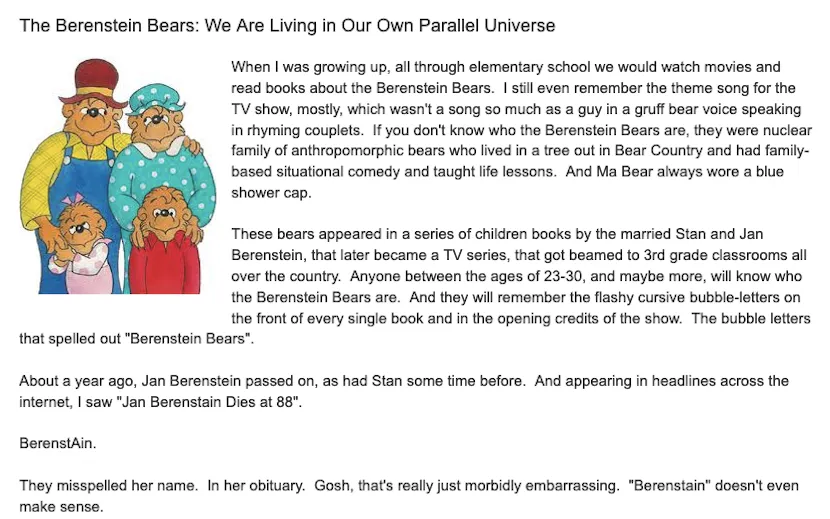
The Berenstein Bears: We Are Living in Our Own Parallel Universe
Caption: None Figure text: None
When I was growing up, all through elementary school we would watch movies and read books about the Berenstein Bears. I still even remember the theme song for the TV show, mostly, which wasn't a song so much as a guy in a gruff bear voice speaking in rhyming couplets. If you don't know who the Berenstein Bears are, they were nuclear family of anthropomorphic bears who lived in a tree out in Bear Country and had family based situational comedy and taught life lessons. And Ma Bear always wore a blue shower cap.
These bears appeared in a series of children books by the married Stan and Jan Berenstein, that later became a TV series, that got beamed to 3rd grade classrooms all over the country. Anyone between the ages of 23-30, and maybe more, will know who the Berenstein Bears are. And they will remember the flashy cursive bubble-letters on the front of every single book and in the opening credits of the show. The bubble letters that spelled out "Berenstein Bears".
About a year ago, Jan Berenstein passed on, as had Stan some time before. And appearing in headlines across the internet, I saw "Jan Berenstain Dies at 88".
BerenstAin.
They misspelled her name. In her obituary. Gosh, that's really just morbidly embarrassing. "Berenstain" doesn't even make sense.
In their 2024 paper The Visual Mandela Effect as evidence for shared and specific false memories across people, Deepasri Prasad and Wilma A. Bainbridge of the Department of Psychology, University of Chicago suggest that the Mandela Effect, it's visual occurrence anyway, is a function of brain science: certain images elicit false memories, pointing to a perceptual/psychological basis for the Effect. From the Abstract:
The Mandela Effect is an internet phenomenon describing shared and consistent false memories for specific icons in popular culture. The Visual Mandela Effect (VME) is a Mandela Effect specific to visual icons (e.g., the Monopoly Man is falsely remembered with a monocle) and has not yet been empirically quantified or tested. In Experiment 1 (N=100), we demonstrate that certain images from popular iconography elicit consistent, specific false memories. In Experiment 2 (N=60), using eye-tracking-like methods, we find no attentional or visual differences that drive this phenomenon. There is no clear difference in the natural visual experience of these images (Experiment 3), and these VME-errors also occur spontaneously.
during recall (Experiment 4; N=50). These results demonstrate that there are cert images for which people consistently make the same false memory error, despite majority of visual experience being the canonical image. 2
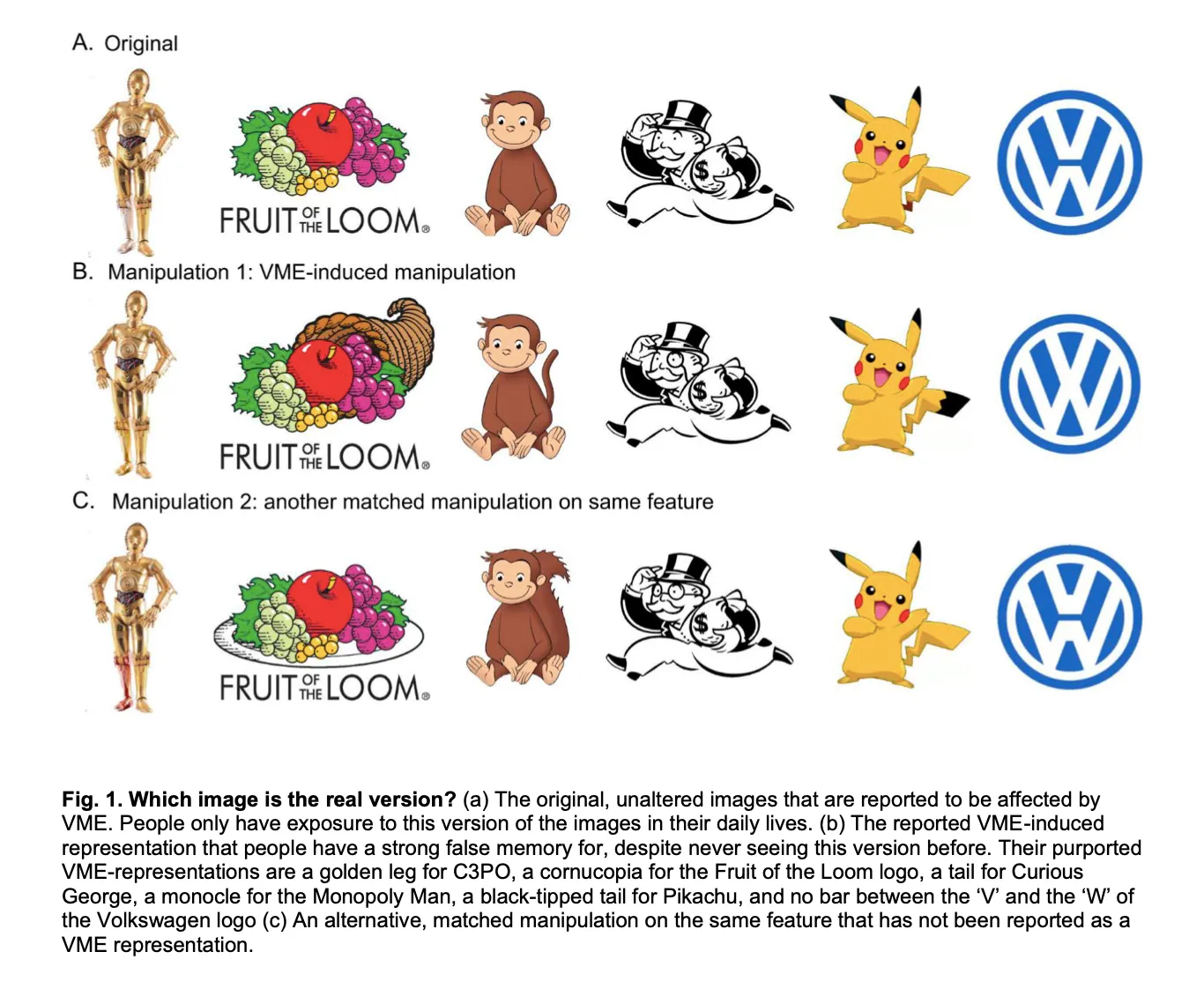
Caption: Fig. 1. Which image is the real version? (a) The original, unaltered images that are reported to be affected by VME. People only have exposure to this version of the images in their daily lives. (b) The reported VME-induced representation that people have a strong false memory for, despite never seeing this version before. Their purported VME-representations are a golden leg for C3PO, a cornucopia for the Fruit of the Loom logo, a tail for Curious George, a monocle for the Monopoly Man, a black-tipped tail for Pikachu, and no bar between the ‘V’ and the ‘W’ of the Volkswagen logo (c) An alternative, matched manipulation on the same feature that has not been reported as a VME representation. Figure text: A. Original FRUIT OF THE LOOM. B. Manipulation 1: VME-induced manipulation FRUIT OF THE LOOM. C. Manipulation 2: another matched manipulation on same feature FRUIT OF THE LOOM.
9/7/25, 11:19 AM New Memory - Scott Benzel
French argues that wider cultural forces are at work, roiling beneath the ME phenomenon, that the sense of of disorientation and dislocation at the heart of ME been primed within experiencers by forces of radical epistemic disruption within bo the mainstream culture and the “undergrounds” or “fringes” rapidly multiplying an syncretizing online. French ties ME to both Colin Campbell’s Cultic Milieu and onli fundamentalist Christianity:
With the emergence of the Internet, websites like Wikipedia, and social media sharing platforms like YouTube, the cultic milieu now encompasses more than Campbell’s “occult” and non-Christian elements (i.e., “occulture”), and appears t be merging, to some degree, with the fundamentalist Christian milieu (for examp Hillary Clinton’s reference to “dark conspiracy theories drawn from ... the far, da reaches of the internet” in her so-called “alt-right speech”) and the underground conspiracy theory community (such as people who self-identify as “red-pilled” Christians). The spread of the Internet and smartphone technology has wrought transformation in society, including what Campbell has called the “cultural underground of society.” It is important to note that persistent secularization mi
https://scottbenzel.substack.com/p/new-memory 9/31
9/7/25, 11:19 AM New Memory - Scott Benzel
be relegating aspects of the institutional religions into the cultic milieu, especial when it comes to CERN, the Mandela Effect, and panic over “fake news.”
Campbell certainly never would have included elements of fundamentalist Christianity when theorizing his underground milieu, yet this seems to me to be potential mistake. More extreme forms of Christianity have sometimes existed in tension with mainstream society, beginning at the outset in ancient Rome and la in modern societies that operate (at least organizationally) along rationalist and materialist principles. In the current “hyper-normal” and “post-truth” world in which we find ourselves, heavily mediated by technological information flows, th cultic milieu theory needs reconfiguring. A phenomenon such as the ME illustra that the institutional “un-fungible” beliefs of Christianity can exist alongside esoteric knowledge and New Age wisdom, oriented around conspiracism and directed at something as highly specialized and scientific as CERN. Campbell anticipates this when he concludes his essay, arguing that “the imputed processe of secularization may be creating circumstances favorable to the growth of the milieu and the further expansion of cultic beliefs” and that “a growth in the pres of science results in the absence of control of the beliefs of non-scientists and in increase in quasi-scientific beliefs.”
Dungeon Synth Primer Per Kaptain Carbon of synthdigest.com:
Dungeon Synth is a style of at-home made fantasy synth. Despite it being a mode incarnation, its history is rooted in the 1990’s black metal scene, when its membe created ambient synth projects and circulated those releases through tapes. Thes black metal side projects laid the groundwork for dungeon synth’s atmosphere a ethos regarding aesthetics, production, and distribution. Dungeon synth is primarily a solo endeavor with one person writing, playing, producing, and
https://scottbenzel.substack.com/p/new-memory 10/31
distributing the music. Today, it has become a diverse genre and cottage industry with tape labels, forums, festivals, and an international fanbase devoted to its history and development. Branching out from its beginnings to include a spectrum of sound, dungeon synth has transitioned beyond its dark ambient beginnings to a sound that includes neoclassical, new age, medieval, and even chiptune music. The space between fans and creators, since its beginning, has been small, leading to an intimate scene that exists today almost entirely on the internet.
This aspect of a virtual community and scene has shown itself unintentionally resilient within the 2020 Covid pandemic. The process of creating music in isolation and sharing it with an international fanbase through virtual albums and mailed media is something that has been unaffected since the wake of a global pandemic. Livelihoods of the creators and parcel service interruptions aside, dungeon synth, along with other virtual genres thrived while live music was suspended for a few years. In the early 2020’s dungeon synth began branching out into live performances ushered and supported by the success of the Northeast Dungeon Siege along with other festivals internationally. 3

Figure text: Totally Awesome Dungeon Synth Webring [Prev] [Random] [Next] Webring Info All Sites Open sites in new tab [check box] Dungeon Synth Webring Webring Info All Sites Open sites in new tab [check box] Previous Site Random Site Next Site Dungeon Synth Webring [Prev] [Random] [Next] Webring Info All Sites Open sites in new tab [check box] dungeon-synth.neocities.org/
Unlike self-named genres or near-contemporaneously-assembled movements with say, the historical avant-garde (Cubism, Futurism, Dada, et al.), the designation
Dungeon Synth is itself a function of something like New Memory, a retrospective fan/archivist-assembled genre:
Classic dungeon synth just existed collectively and independently in the mind of musicians with their releases, which were then resurrected by fans and archivist decades after their original releases. Before 2011, dungeon synth as a concept an even name did not exist; rather it was a nebula of likeminded music under the na “dark dungeon music,” “neoclassical,” and/or “medieval” that was sorted with otl dark ambient, darkwave, and experimental electronics. Dungeon synth did not begin as a named genre until one of its fans, Andrew Werdna, started “The Dungeon Synth Blog” in 2011 to promote the type of music made by Mortiis, Wongraven, and related artists. The creator of that blog coined the name and collected the material he found interesting and fit his view on what the genre should be. This arcane way of genre creation lays at the foundation of dungeon synth and its existence would not be if not for fans like Werdna archiving and connecting the dots.
Dungeon synth, in its classic sense, exists due to the will of its fans who are uncovering more and more releases, which in turn, reshapes its history over and over. One of the releases that will be discussed, The Sleeping Green by Lunar Womb, is a construction of a late 90’s release that was shelved and lay dormant o harddrive for almost 20 years.
The impact of digital culture is near-omnipresent in the discourse surrounding bot ME and Dungeon Synth. In their introduction to The Microgenre, A Quick Look at Sn Culture, author/editors Anne H Stevens, Molly C O’Donnell suggest that the existen of the microgenre itself is an outgrowth of digital culture with a long pre-digital prehistory:
In many ways, popular culture has always relied on hyper-specific formulas and subgenres. Jonathan Goodwin asserts [...] that microgenres are inherently digital but he does identify several usages of the term “microgenre” in critical works of
1980s and 1990s, where writers use it as a way to characterize subgenres of a high degree of specificity. Even earlier, a French article about historical fiction from 1984 distinguishes “microgenre” and “macrogenre”: a microgenre is a more narrowly defined group of texts connected in time and space, whereas a macrogenre is more diffuse and thus harder to generalize about, for instance, historical novels of the era of Walter Scott versus historical novels more broadly construed or the female gothic novels of the 1790s as compared to the long-ranging and multifaceted tradition of the gothic writ large. 1
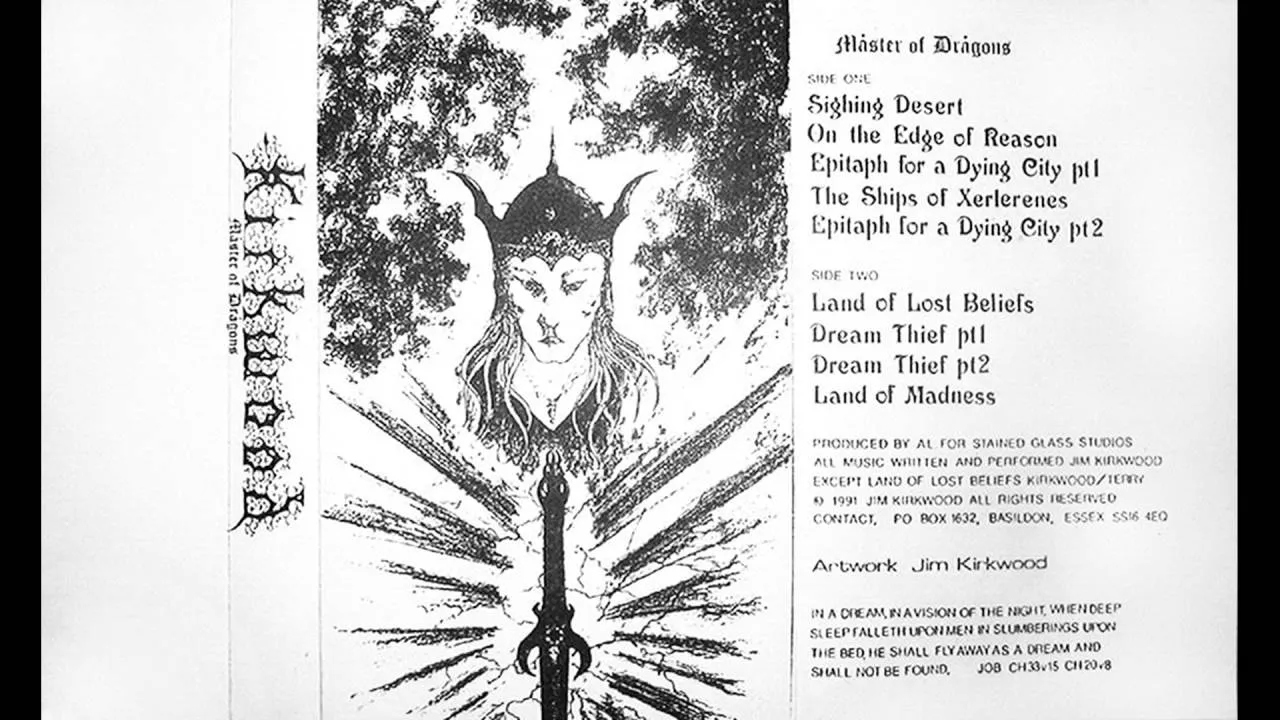
Figure text: Master of Dragons SIDE ONE Sighing Desert On the Edge of Reason Epitaph for a Dying City pt1 The Ships of Xerlerenes Epitaph for a Dying City pt2 SIDE TWO Land of Lost Beliefs Dream Thief pt1 Dream Thief pt2 Land of Madness PRODUCED BY AL FOR STAINED GLASS STUDIOS ALL MUSIC WRITTEN AND PERFORMED JIM KIRKWOOD EXCEPT LAND OF LOST BELIEFS KIRKWOOD/TERRY © 1991 JIM KIRKWOOD ALL RIGHTS RESERVED CONTACT, PO BOX 1632, BASILDON, ESSEX SS16 4EQ Artwork Jim Kirkwood IN A DREAM, IN A VISION OF THE NIGHT, WHEN DEEP SLEEP FALLETH UPON MEN IN SLUMBERINGS UPON THE BED, HE SHALL FLY AWAY AS A DREAM AND SHALL NOT BE FOUND, JOB CH33V15 CH20V8 Master of Dragons
The Dungeon Synth microgenre has been assembled with a significant grafting over differences. While many of the early examples are an ambient electronic outgrowth of black metal, Jim Kirkwood was coming from a completely different cluster of influences including kosmische, 70’s european synth, and experimental electronic music:
Jim Kirkwood – Master of Dragons (1991)
One of the more popular early dungeon synth releases (one that is even tagged as dungeon synth) is 1991’s Master of Dragons by electronic composer Jim Kirkwood. Kirkwood was a UK musician who made a series of fantasy ambient records in the early 90’s. Master of Dragons would be an interesting starting point for dungeon synth as it has the aesthetics and sound for an origin story. As far as I know, Jim Kirkwood had no connection to the 90’s black metal scene, rather his self released fantasy ambient records were just an extension of Berlin School electronics. It is my belief that dungeon synth in 10 or 20 years will have a more formalized history and for now exists as a genre that is being written as we speak. Its history is being constructed almost simultaneously, which makes writing about it strange if not incredibly exciting.
As of now, we have a roadmap of black metal musicians who made synth albums that were a long form version of the interludes that would prelude or act as an epilogue to many black metal demos. Additionally, we have dark ambient musicians who would release synth based records in the same trading circles as black, death and thrash metal records. These are all well known parts of classic dungeon synth and is the sound tagged as “Old School Dungeon Synth.” It is a world of gloom where there are instances of wonder and magic but it is all cast in a haze of morose shades.
Caption: Mortiis, Født Til Å Herske Figure text: MORTIIS Født til å Herske
Kaptain Carbon goes on to hymn an early emanation from the “haze of morose shades”:
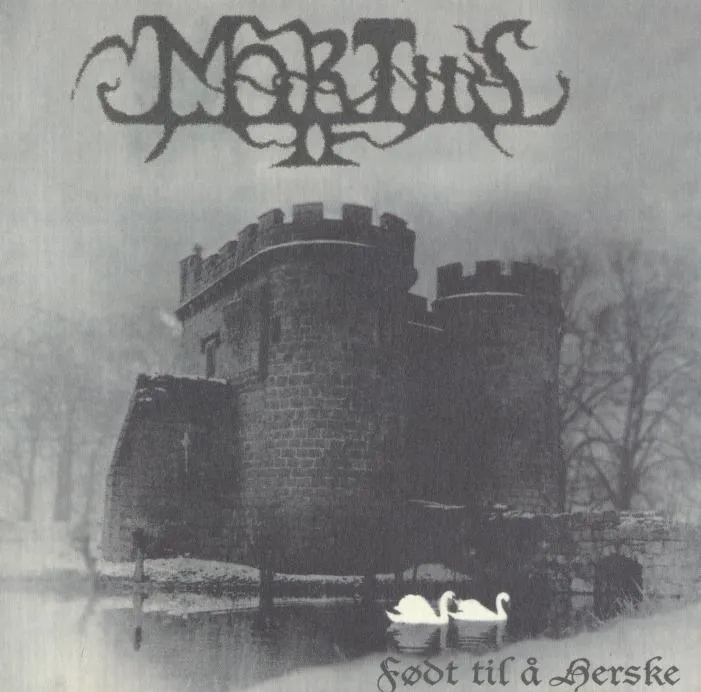
Mortiis – Født til å herske (1994)
Håvard Ellefsen, better known as Mortiis, is a project which is almost synonymous with classic dungeon synth, or at least the history of dark medieval synth. Mortiis was the bassist for the black metal band Emperor from 1993 to 1994. Mortiis many more was a milestone in the development of what was then called dark dungeon music and a waypoint for future composers to model their sound. While Mortiis would make a variety of music, it is his “Era I” records or the releases that span from 1993 to 1999 that would become the center of reverence. Født til å herske (Born To Rule) is a 53 minute song split into two parts, which brings the listener into a world of cold and uncaring passages that snake around the undercroft of a long abandoned castle. Between shadows and sunlight, Født til å herske is drama in its approach to cast emotion and atmosphere in a macabre play.
Caption: None Figure text: SECRET STAIRWAYS ENCHANTMENT OF THE RING side one: 1) What Lies Beyond the Door 2) Reflections on the Lake 3) Eve of the Snow Queen 4) Lammas Tide side two: 5) Collecting Primroses 6) Finvarra's Chessboard 7) Amongst the Waterlilies 8) Omward. to Hy Breasail the music presented on this tape (all instrumental) is might be suitable for the following: sleep/relaxation/meditation, obscure late-night ambient radio programs, in-store play (esoterically oriented), painting, child day-care naptime music, nocturnal woodland wandering, etc. etc.
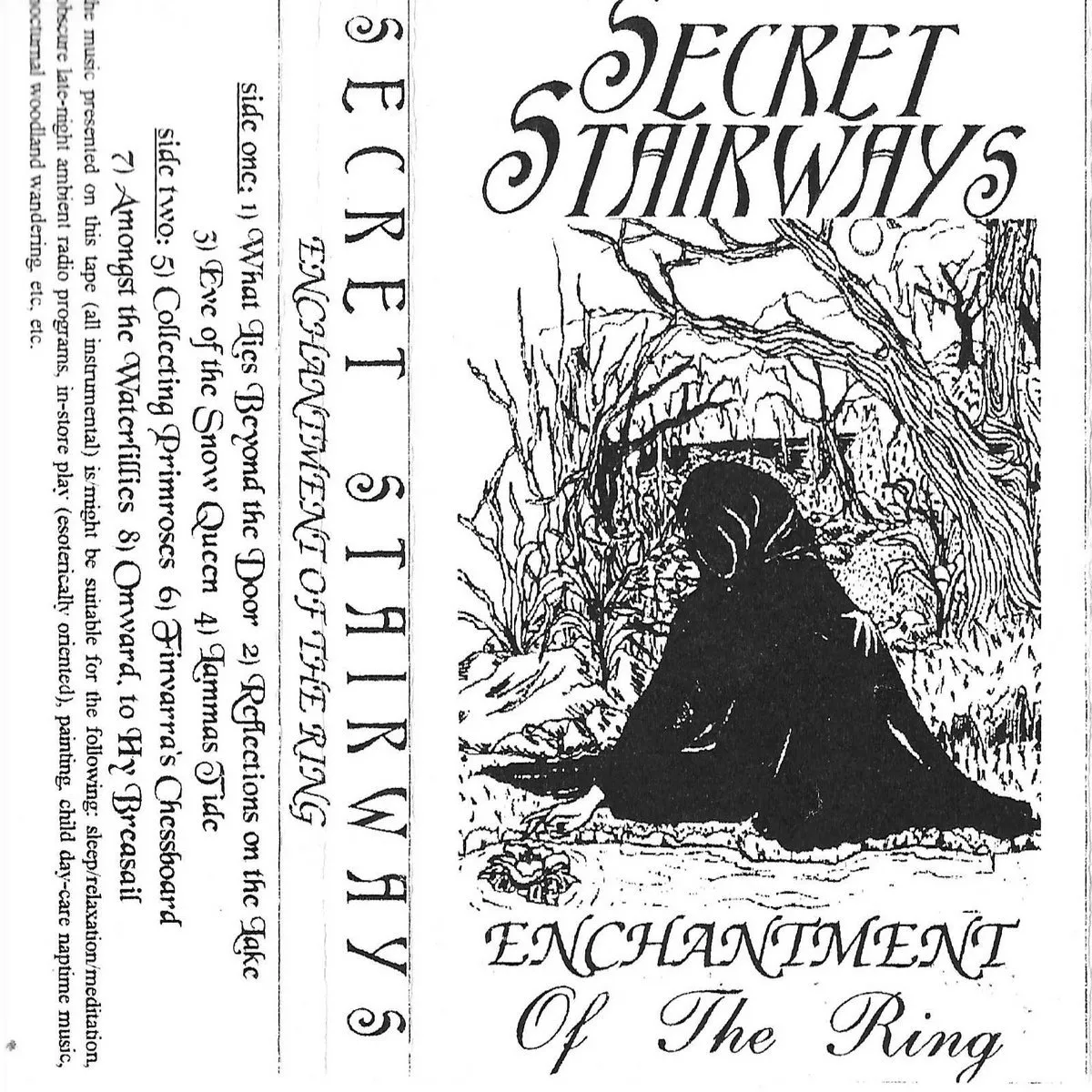
Finally, the genre, like black metal, has its examples of works elevated retrospectively by the impact of tragedy:
Enchantment of the Ring has become iconic for its production and sense of wonder which creeps across the ground like fog. For most, Secret Stairways would reach a wider audience decades after its initial release and years after the suicide of Davi
in 2011. Both Secret Stairway releases now stand as a shrine to its creator, who seemed to be a mage capable of marrying melody with a lingering sense of loss a grief.
Between Worlds
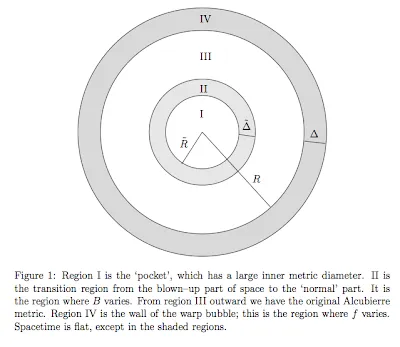
Caption: Figure 1: Region I is the ‘pocket’, which has a large inner metric diameter. II is the transition region from the blown-up part of space to the ‘normal’ part. It is the region where B varies. From region III outward we have the original Alcubierre metric. Region IV is the wall of the warp bubble; this is the region where f varies. Spacetime is flat, except in the shaded regions. Figure text: I, II, III, IV, Δ, R, R̃
In The Magician’s Nephew, C.S. Lewis paints a picture of a smallish forest, The Wood between Worlds, dotted with pools, with each pool a portal to another world... Reec of The Wood between Worlds blog, offers up some possibilities for the magic at work in the Wood:
The Alcubierre warp drive engine is a device that stretches the spacetime around a spaceship, forming what is known in scientific literature as the "warp bubble" (really, that's what we call it). Within the warp bubble, the ship is moving at "normal speeds", but outside of the bubble, the ship is moving faster than the speed of light. The geometry for this is known and well understood, and the means of producing it are also fully understood.
You're probably wondering, if we know how to make a warp drive, why we haven't actually... you know... made a warp drive. And that's a wonderful question. We haven't made a warp drive because it requires a lot of stuff that probably doesn't exist, namely negative energy mass. It requires a whole lot of it. Like, ten times positive mass of the entire universe in negative mass.
Van den Broeck proposed an idea to get around this, one elegant in both its simplicity and apparent absurdity.
Here's what you do: Take a bag. Distort space, so that the inside of the bag is big than the outside of the bag. The inside is big enough to hold a spaceship, and the outside if around the Planck length. Now stick your spaceship inside of the bag, and then put a warp bubble around the bag. It requires a lot less negative energy. Voila! Crisis averted.
Now, warp drives are cool of themselves, but what I really want to talk about is the device that distorts space so the inside of the bag is bigger than the outside of the bag. This is sometimes called a "van den Brocek bubble", or, somewhat more appropriately, a Bag of Holding.
We've gone from warp drives to the bag of holding, and we're not even done yet. We're going all the way to Narnia. 5
CERN
Figure text: tangerine dream, Ohr, OMM 2/56021, Stereo, zeit
Per ME’s online “researchers”, CERN (the Large Hadron Collider in particular) shift reality beneath our feet—its interventions into the quantum realm shifts worlds/dimensions/timelines like so many grains of sand—ME being the result. Regarding the presence of CERN within ME spheres, French writes:
Although a variety of explanations are exchanged among self-identifying ME researchers, the most prominent theorizing about the source of the parallel reali is divided into two separate but interrelated camps. Both camps overlap in that t believe that the LHC at CERN — which has been openly trying to discover extra dimensions and the particles that make up dark matter — has succeeded in eithe
9/7/25, 11:19 AM New Memory - Scott Benzel
punching a hole in spacetime, contacting an alternate dimension, or altering th timeline through experiments which have resulted in the past becoming switche changed, or deliberately edited. The concept of constructing a people’s history an its direct effect on them is nothing new to historians, but what may be new is the extent to which people in the public sphere are discussing the idea as a real possibility for explaining feelings of global anxiety, confusion, disorder, and postmodernity. In addition to the CERN connection, both camps cite the development of the D-Wave system quantum computers as partly responsible for tampering with the fabric of reality through its complex computational processin operations. According to the D-Wave website:
To speed computation, quantum computers tap directly into an unimaginably vast fabri reality — the strange and counterintuitive world of quantum mechanics. Rather than s information using bits represented by 0s or 1s as conventional computers do, quantum computers use quantum bits, or qubits, to encode information as 0s, 1s, or both simultaneously. This superposition of states, along with the quantum effects of entanglement and quantum tunneling, enable quantum computers to consider and manipulate many combinations of bits simultaneously.
Both camps of ME researchers believe in a conspiratorial hidden hand of scientists, politicians, corporations, “globalists,” and neoliberal financiers working to create a New World Regime in which billions of unconscious, materially distract ed political subjects are manipulated, oppressed, and dominated. Admittedly, the development of advanced technologies are frequently funded by government security agencies and “D-Wave’s first customer was Lockheed Martin, one of the world’s largest aerospace, information systems, and defense contractors.
[…]
Where the two ME camps differ is on the evangelical front. The first camp subscribes to a mostly secular conspiratorial worldview filled with corrupt businessmen and politicians trying to enslave humanity, with the theories of quantum
https://scottbenzel.substack.com/p/new-memory 22/31
9/7/25, 11:19 AM New Memory - Scott Benzel
mechanics and the work carried out at CERN and quantum computers allowing the possibility of an alternate dimension. However, not all the ME believers in th camp are atheistic, and many subscribe to a type of New Age spirituality with blends of esotericism, quantum mysticism, and Asian religion and philosophy.
The second camp colors their language with biblical references, the dawning apocalypse, Satanic magical rituals, and the rise of the Antichrist, signs for whic they locate in all the various aspects of the ME. For this camp, the direction of th world away from God has resulted in these subtle reality alterations, which they interpret as fulfillment of biblical prophecy, citing Daniel 7:25 which states that Antichrist will “change times/seasons and laws.”
https://scottbenzel.substack.com/p/new-memory 23/31
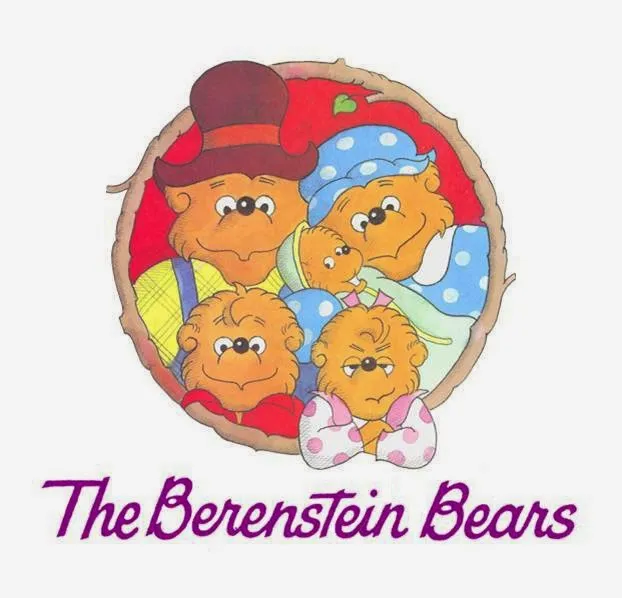
Figure text: The Berenstein Bears
Reece: Someone on reddit posted this picture. The picture is definitely photoshopped. The person posting it has denied responsibility for the shop job; allegedly, he downloaded the picture from the internet years and years ago and h it saved in a folder and didn't think about it until the controversy sprung. Photoshop diagnostics show exactly where the image has been altered.
But looking at it... suddenly, everything seems so right. That's what the name us to look like, back in Universe E. That is the name that was on the books. That's what the books should say.
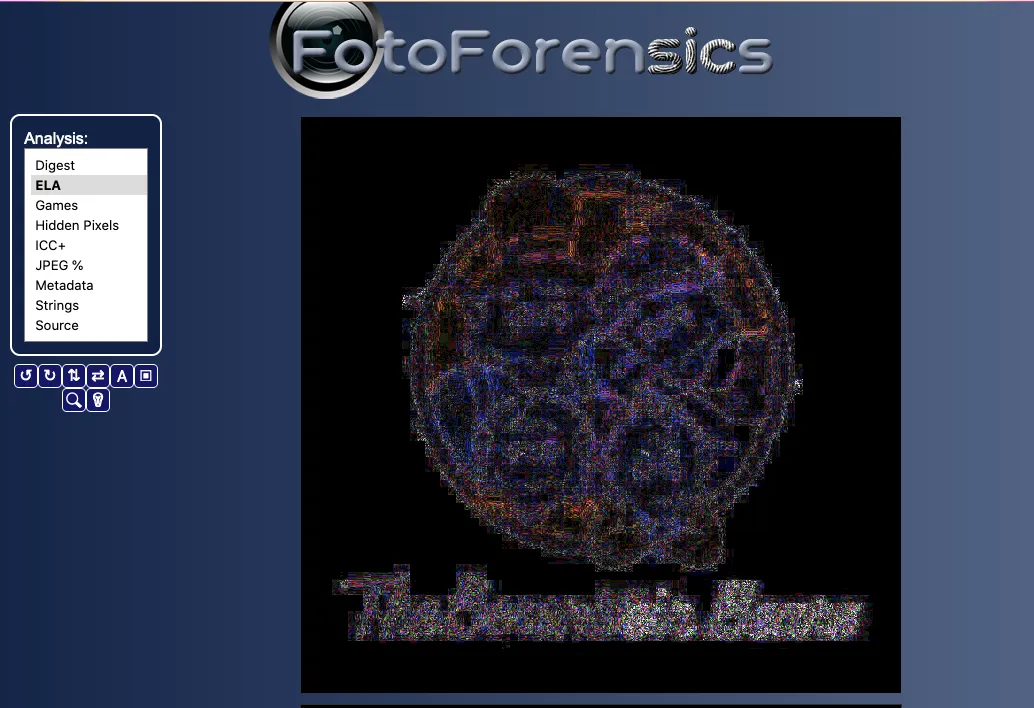
Caption: ELA image of alterations to The Berenstain Bears logo Figure text: FotoForensics Analysis: Digest ELA Games Hidden Pixels ICC+ JPEG % Metadata Strings Source
French lays out an exhaustive litany of examples of ME, emphasizing the online, digital nature of the discourse around the Effect:
There are, incidentally, hundreds of examples (of M.E.) circulating online.
The movie (and novel) by Anne Rice called Interview with a Vampire has been changed to Interview with the Vampire. The name of the television series Sex in the City is now Sex and the City. The title of the cartoon series Looney Toons is now spelled Looney Tunes. The old TV series Johnny Quest is now spelled Jonny Ques
The famous line from the TV show I Love Lucy, “Lucy, you’ve got some ‘splaining do,” was never said on the show. In The Empire Strikes Back (1980) the Star Wars fil the famous line “Luke, I am your Father” has been changed to “No, I am your
9/7/25, 11:19 AM New Memory - Scott Benzel
Father.” The character C-3PO from the Star Wars series is now thought to have a silver leg that it never had before. In Forest Gump (1994), the line “Life is like a bo of chocolates” has been changed to “Life was like a box of Chocolates.” In Field o Dreams (1989), the line “If you build it, they will come” has changed to “If you bui it, he will come.” The line “Mirror, Mirror on the wall” from Disney’s Snow White and the Seven Dwarfs (1937) is now “Magic Mirror on the wall.” In the first Jaws movie (1975), the famous line “We’re going to need a bigger boat” has been chang to “You’re going to need a bigger boat.” Several things have been altered in the original version of The Wizard of Oz (1939). The first is that the line “Toto, I don’t think we’re in Kansas anymore” is now “Toto, I’ve a feeling we’re not in Kansas anymore.” The second is that during a scene in the movie in which the main characters are lost in a scary wood, the Scarecrow now wields a pistol that appe entirely out of place. The memorable opening lyrics of the song from Mister Roge Neighborhood (1968–2001), “It’s a beautiful day in the neighborhood,” has changed “It’s a beautiful day in this neighborhood.” Another song lyric alteration is the fi line from the Queen song We are the Champions (1977), in which Freddy Mercury sings “... of the world” at the end. Now he doesn’t sing that line; the song just end
The monkey from the children’s series Curious George (2006–2015) no longer has a tail. Two obscure television shows starring The Brady Bunch from the late ‘70s a early ‘80s called The Brady Brides and The Brady Bunch Variety Hour Show are thou only to exist in this new parallel universe. In the 1980 film The Elephant Man, the ending is no longer sad but uplifting, with a ghost appearing that people seem no to remember. The 1984 Toyota Van, the so-called “terrorist van,” from the first Back to the Future (1985) movie has been changed into the iconic VW Bus. The character Dolly, who is Jaws’s girlfriend in the 1979 James Bond movie Moonrake no longer has braces. There have also been many changes to names of various ac and famous persons, such as Peanuts creator Charles Schulz (remembered as Charles Shultz), stuntman Evel Knievel (remembered as Evil Knievel), country singer Reba McEntire (remembered as Reba McIntyre), and Sally Field (remembered as Sally Fields).
https://scottbenzel.substack.com/p/new-memory 26/31
9/7/25, 11:19 AM New Memory - Scott Benzel
In addition to TV, film, and music changes, a whole host of product logos are thought to have been altered, including Coca-Cola, Yoo-hoo, Cup Noodles, Depe JCPenney, Oscar Mayer, Totino’s, KitKat, Reddi-wip, Froot Loops, Chick-fil-A, O Clean, Vicks VapoRub, Scott, Skechers, Double Stuf Oreos, Bragg, Febreze, Cura Johnnie Walker, Ford, Volvo, Volkswagen,and many others. Curiously, most of th corporations behind these brands claim never to have changed and/or updated th logos.
Changes cited in the Holy Bible are too numerous to mention, but I will include few of the most popular. These pertain to the King James Version, and they are found changed in the physical copies of old, owned KJV bibles, as well as in onlin versions. One is to be found in Isaiah 11:6. This passage used to begin “The lion the lamb will lay down together” but now it says: “The wolf will live with the lamb.” In Matthew 9:17, the word “wineskins” here has been changed to wine bottles. Luke 5:24 no longer says bed or mat, but now says: “I say unto thee, Aris and take up thy couch, and go into thine house.”
Proponents of the ME also believe that the Earth’s geography has been altered, w South America now being too far east, and Australia being much closer to Indonesia and Papua New Guinea. There are many other examples, as well. Hum anatomy has also undergone some changes, including the size of various organs such as the liver, as well as the shape, size, and position of floating ribs at the bottom of the ribcage, and the heart is now located in the center of the chest, rat than at the left breast. As with Nelson Mandela’s misremembered death, many changed historical events are frequently cited. Some people believe the “Tank M who stood before a column of tanks on June 4, 1989, in Tiananmen Square was killed and run down by the tank, but the man simply halted the line of tanks and was ushered out of harm’s way. Another change is the 1963 Lincoln four-seater th drove John F. Kennedy on the day he was assassinated. Now there are six seats in the Lincoln, and six people too, in the famous video footage and photographs of assassination. To top things off, Hitler now has blue eyes instead of brown eyes
https://scottbenzel.substack.com/p/new-memory 27/31
9/7/25, 11:19 AM New Memory - Scott Benzel
and one of the spaces you used to be able to buy on a Monopoly game board was called Ventura Avenue but now it is called Ventnor Avenue. And Rich Uncle Pennybags, the mascot of Monopoly, never had a monocle.
And so on, and so on.
Something is shifting in our collective and individual experience of the past. That something seems intimately tied to the digitization and algorithmization of culture Google “New Memory” and you get ads for RAM and explainers of the latest innovations in digital memory:
New memory types include:
FeFET or FeRAM: A next-generation ferroelectric memory.
Nanotube RAM: In R&D for years, nanotube RAM is targeted to displace DRAM Others are developing carbon nanotubes and next-generation memories on the same device.
Phase-change memory: After shipping the first PCM devices, Intel is readying a new version.
As we retrospectively reconfigure or attempt to reclaim the past, new assemblages come into being while certainties are lost…and repeat. Are we not ourselves retrospectively made? Do we not ourselves lose who we were or thought we were? D we not over time change the spelling of our names. And so on, and so on…
https://scottbenzel.substack.com/p/new-memory 28/31
Caption: Alley Catss Figure text: 1 2 3 4
Caption: Broadcast, Spell Blanket Figure text: BROADCAST (logo) SPELL BLANKET Broadcast Collected Demos 2006 - 2009 DREAM VOICE ONE: (VARI SPEED slow speaking) From the bus I can see a car falling from a cliff. It is falling sideways-on like it has banked the corner too fast. I call to my friend to watch and we both see the car fall and crash on the groun below. DREAM VOICE TWO: (speaking slowly) I was alarmed by a gentle thudding coming from the porch I tried to see from my window what it could be but the angle was too steep an the dark unlit path made it impossible to see anything. DREAM VOICE THREE: (speaking slowly) I am convinced the parcel is for me, an old lady has bought it to the door but she doesn't want to show me the name, like she doesn't believe it is for me. I try to look at the writing but she keeps moving it so I cant read it. I am convinced it is for me but finally I don't recognise the name. (LOOP) I don't recognise.
1 Aaron French, The Mandela Effect and New Memory, Correspondences 6, no. 2 (2018) 201–23 ISSN: 2053-7158 (Online) correspondencesjournal.com
2 Deepasri Prasad and Wilma A Bainbridge, The Visual Mandela Effect as evidence for shared specific false memories across people, Department of Psychology, University of Chicago, 2022, prepress for Psychological Science
3 Kaptain Carbon, Dungeon Synth Primer, synthdigest.com/primers, nd.
4 Anne H Stevens, Molly C O’Donnell, eds. The Microgenre, A Quick Look at Small Culture. New York: Bloomsbury Academic, 2020.
5 Reece, The Wood Between Worlds blog, www.woodbetween.world, nd.
Subscribe to Scott Benzel

Figure text: Type your email... Subscribe By subscribing, I agree to Substack's Terms of Use, and acknowledge its Information Collection Notice and Privacy Policy.
© 2025 Scott Benzel · Privacy · Terms · Collection notice Substack is the home for great culture
Notes
Footnotes
-
[Note: The footnote text is not provided in the source image.] ↩